


Life is a journey with many milestones along the way. When older adults reach the stage where they are exploring a lifestyle change to a senior living community, they begin a voyage within a voyage—the buyer’s journey.
The buyer’s journey describes the decision-making process that a potential customer goes through before making a purchase. The traditional framework of the buyer’s journey has three main stages:
- Awareness
- Consideration (exploring solutions, comparing vendors)
- Decision (purchase)
Senior living sales and marketing have seen significant changes over the years in all three areas. Technology has added new avenues of awareness and consideration for older adults and their families, and an increased demand for personalization and customization now drives their decisions.
In the past, senior living communities got noticed through word of mouth, print advertising, or brochures. Awareness for today’s older adults and their families is much more likely to start online, as they research different options and read reviews before contacting a community.
Stages of the Buyer’s Journey
Once a potential resident or family has become aware of a senior living community, the consideration stage comes next. In the past, this stage would involve a visit to the community, meeting with staff, and touring the facilities. However, today’s buyers rely more and more on virtual tours and online resources to narrow their choices before they ever set foot on a community’s property. Self-service is the name of the game, especially in the wake of the COVID pandemic.
Finally, when a prospective resident or their family has narrowed down their options to one or two communities, the decision stage begins. Location and cost are still the top two factors influencing this decision, but today’s buyers are more likely to seek a personalized experience. If the amenities and services match their desired lifestyle, older adults may be willing to pay a premium for a community that can meet their specific needs and preferences.
The digital age and the rise of smartphones and mobile devices have made the buyer’s journey more complex and fragmented than ever before. It’s a jungle out there—but there is a path through, and that path is personalization.
The right tools and tactics make it easy to guide visitors to your community’s website from awareness to consideration on their first interaction with your site.
A Virtual Sales Assistant like Waypoint’s Navigator combines self-serve calls to action such as downloading a brochure, scheduling a tour, or booking time with an advisor, with real-time live chat support for help with common questions that may arise.
Note how each CTA moves the site visitor further along the sales funnel, with increasing levels of engagement and more detailed information at each stage:
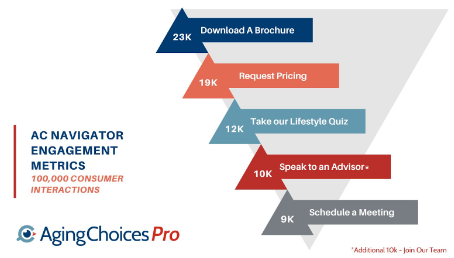
And with the help of Waypoint’s Lifestyle Quiz, using data to curate each individual prospect’s experience has never been easier.
Contact Waypoint today to set up your free demo!